Introduction
Choosing the right accommodation can significantly shape your travel experience. In the United Kingdom, travellers often choose between two main options: traditional hotels or serviced apartments.
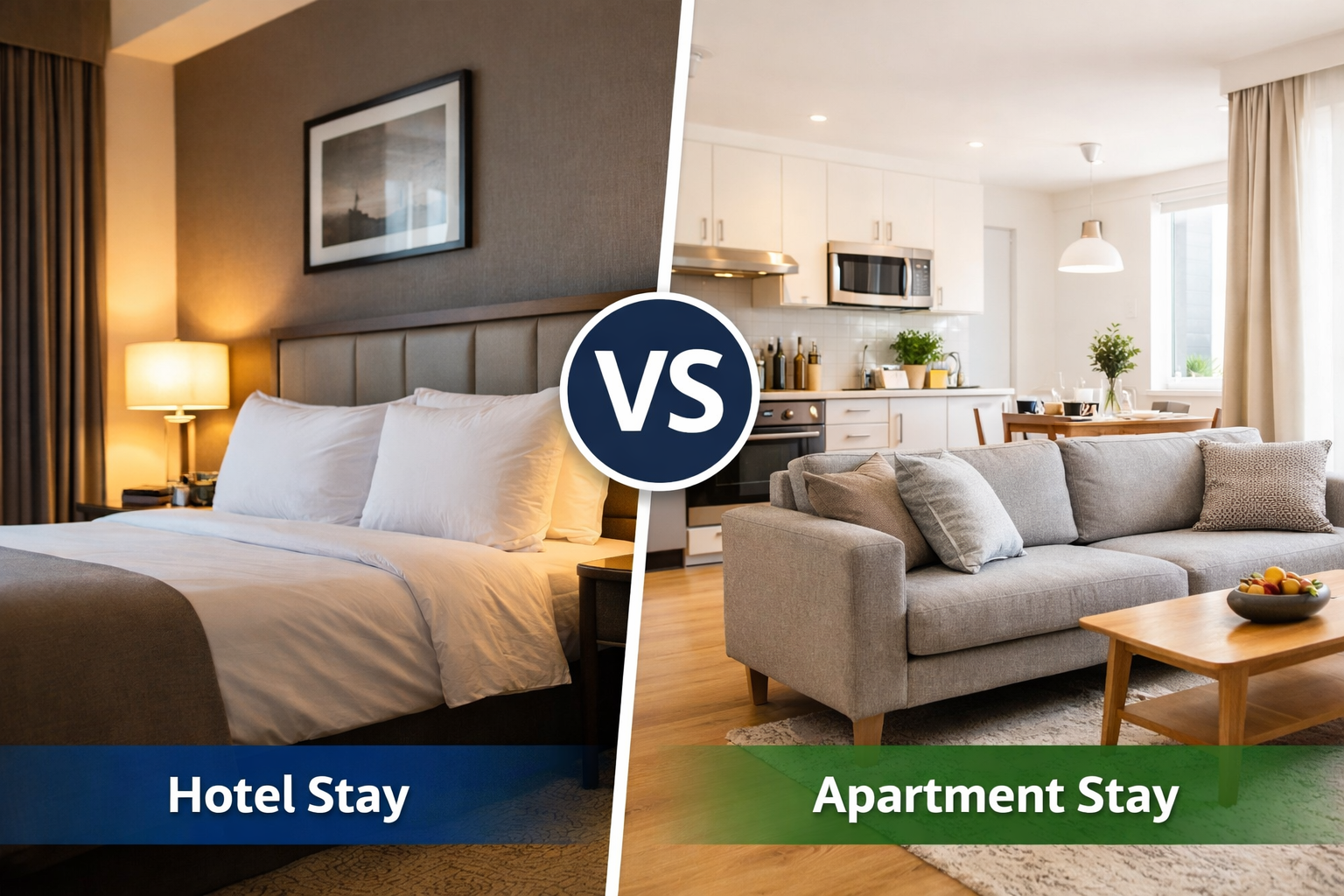
Both offer comfort and convenience, but they serve different travel styles. Hotels are designed for short stays and hospitality services, while apartments provide extra space, independence, and flexibility.
Understanding the difference between these accommodation types can help you choose the best option for your trip, whether you're visiting London, Manchester, Leicester, or other UK destinations.
This guide explains the key differences between hotel stays and apartment stays in the UK, including when each option makes the most sense.
What Is a Hotel Stay?
A hotel stay refers to accommodation in a property specifically designed for short-term guests. Hotels are purpose-built to provide hospitality services, convenience, and professional guest support.
Hotels are widely available across major UK cities such as:
• London
• Manchester
• Leicester
• Birmingham
• Liverpool
Typical hotel features include:
•Private bedroom and bathroom
•Daily housekeeping
•Reception or concierge services
•Breakfast or restaurant facilities
•Flexible short-term booking
•Security and structured check-in
Hotels are especially suitable for travellers staying one to three nights, business visitors, or people arriving late at night who need reliable check-in services.
What Is an Apartment Stay?
A serviced apartment or short-term rental apartment offers accommodation similar to a small private home.
These properties provide more space and self-contained living facilities, allowing travellers to live more independently during their stay.
Most serviced apartments include:
•Separate bedroom and living area
•Kitchen or kitchenette
•Dining space
•Laundry facilities
•Weekly cleaning services
* More storage space
Apartment stays are commonly chosen by families, long-stay travellers, and business professionals working temporarily in a UK city.
Key Differences Between Hotels and Apartments
1. Space and Layout
Hotels usually provide compact rooms designed primarily for sleeping and short visits.
Serviced apartments offer larger living spaces, including living rooms and kitchens, which make them more comfortable for longer stays.
For travellers who need room to work, relax, or cook meals, apartments often provide greater flexibility.
2. Hospitality Services
Hotels are known for offering full hospitality services, including:
•Daily housekeeping
•24-hour reception
•Concierge assistance
•On-site restaurants or breakfast service
Serviced apartments usually offer limited services, focusing instead on independence and privacy.
Travellers who prefer hotel-style support and assistance may find hotels more convenient.
3. Cost for Longer Stays
For short stays, hotels are often the most practical option.
However, apartment stays can become more cost-effective for longer visits, especially when travellers can cook meals instead of dining out.
This makes apartments popular for:
•week-long business trips
•relocation stays
•family travel
4. Privacy and Flexibility
Apartments allow travellers to live more independently, with fewer interruptions from housekeeping or hotel staff.
Hotels provide a structured hospitality environment, which many travellers prefer for short visits or business travel.
Both options offer benefits depending on the purpose of the trip.
When a Hotel Stay Is the Better Choice
Hotels are usually the best option when:
•Your stay is short (1–3 nights)
•You want daily cleaning and hotel services
•You are travelling for business
•You arrive late at night
•You want central city locations near transport hubs
Hotels near Gatwick Airport, Heathrow Airport, and Manchester Airport are particularly popular for overnight stays and early morning flights.
When an Apartment Stay Makes More Sense
Serviced apartments may be a better option when:
•You are travelling with family
•Your stay is longer than four nights
•You want cooking facilities
•You need more space
•You prefer a home-like environment
Many professionals visiting UK cities for extended work assignments prefer apartment accommodation.
Safety and Booking Considerations
Whether booking a hotel or apartment, travellers should always check:
•Verified property listings
•Transparent pricing
•Cancellation policies
•Accurate location information
•Recent guest reviews
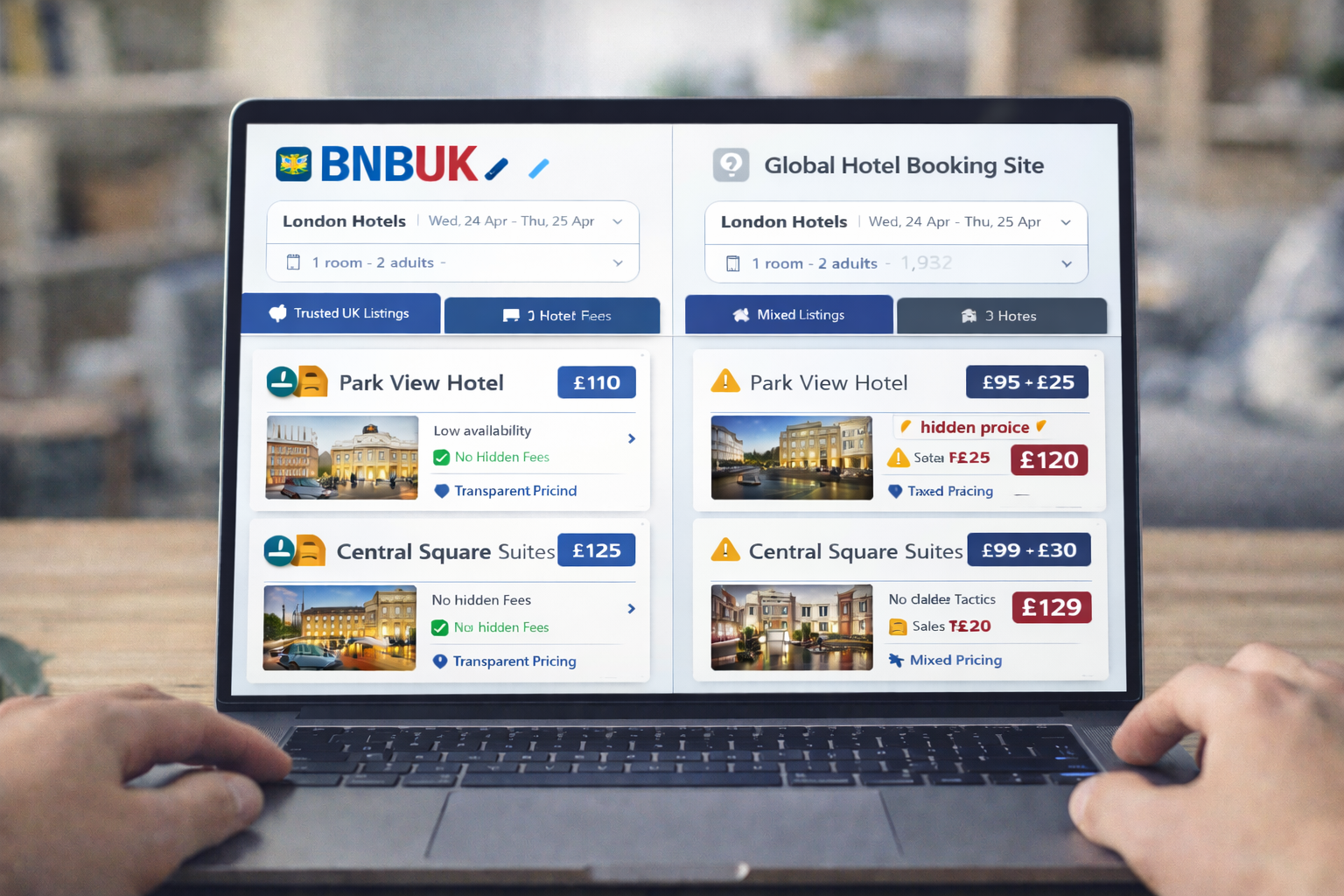
Booking through a trusted hotel platform or verified accommodation provider helps ensure that property details and pricing are accurate before arrival.
Which Option Is More Popular in the UK?
Hotels remain the most common accommodation type across the United Kingdom.
They are widely available, easy to book, and provide consistent hospitality standards.
However, serviced apartments have grown significantly in popularity, particularly among:
•business travellers
•families
•long-stay visitors
Both accommodation types now play an important role in the UK travel market.
Conclusion
There is no single “best” option between hotels and apartments. The right choice depends on your travel needs, trip length, and personal preferences.
Choose a hotel stay if you want convenience, hospitality services, and a short visit.
Choose an apartment stay if you prefer space, flexibility, and a home-like environment.
Understanding these differences helps travellers select accommodation that fits their budget, comfort level, and travel style.