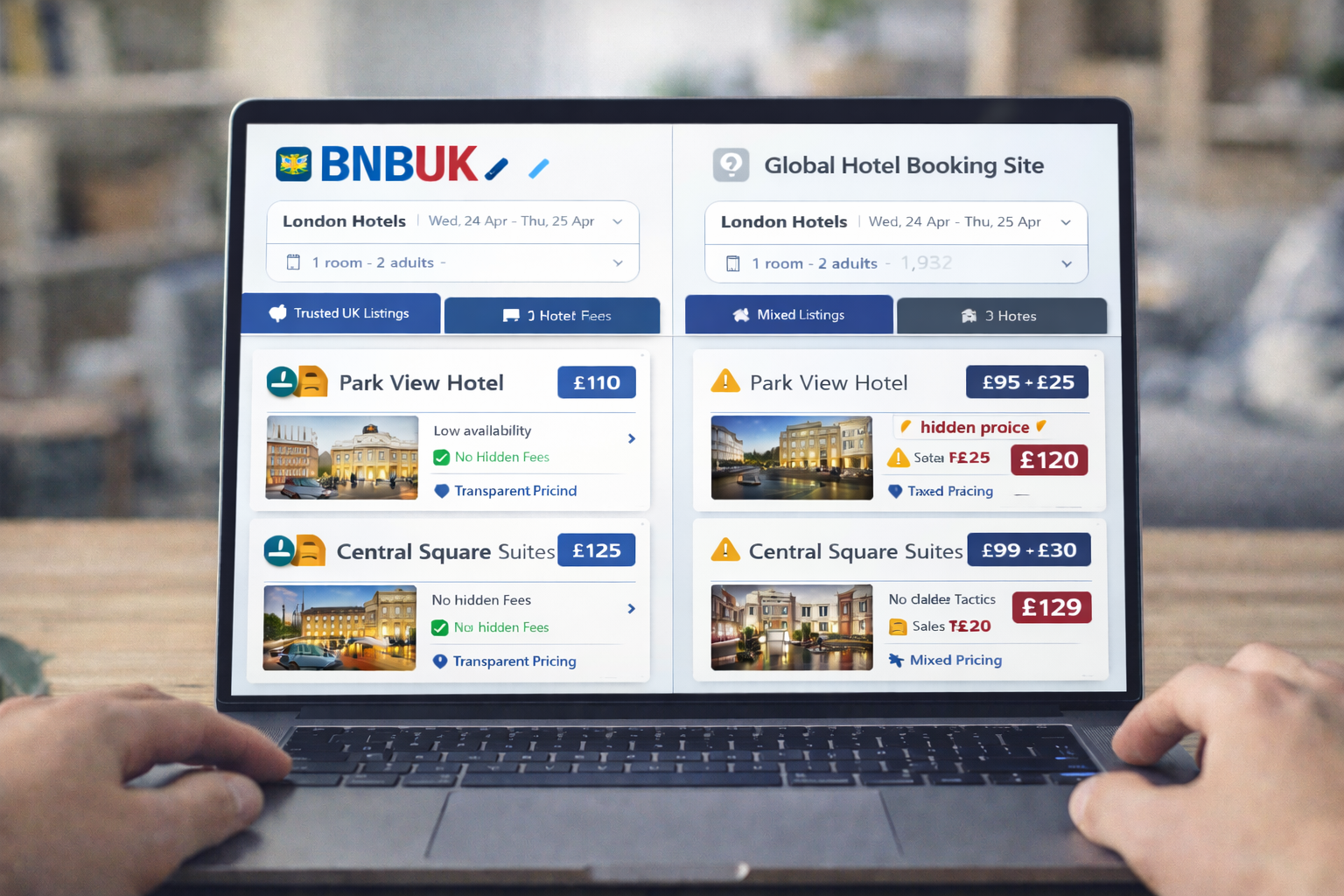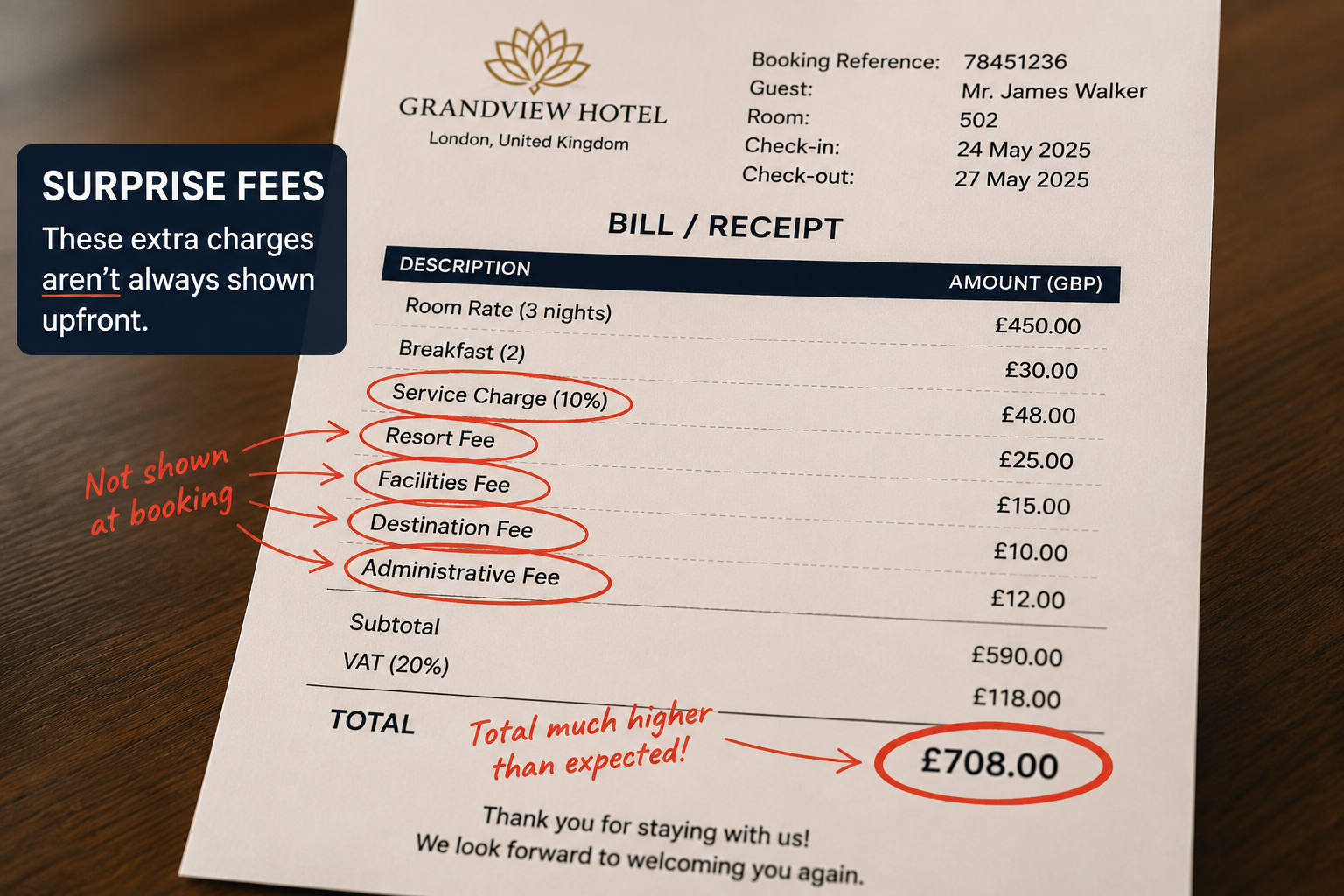
Hidden hotel fees are charges added on top of the room rate sometimes at checkout, sometimes at the hotel that make your stay cost more than the headline price suggested. The most common in the UK are booking or service fees, card and currency charges, early check-in or late check-out fees, parking, breakfast that isn't included, and, increasingly, local visitor levies (tourist taxes). The good news: since April 2025, UK law bans "drip pricing", so any mandatory, unavoidable fee must now be shown in the total price from the start not sprung on you at the end.
To avoid surprises, do three things: check the final total including taxes and fees, read what the rate actually includes (breakfast, parking, cancellation), and book direct with a transparent provider where the price you see is the price you pay. Below, we break down each fee, what's now illegal to hide, and a quick checklist to keep your bill honest.
What counts as a hidden hotel fee?
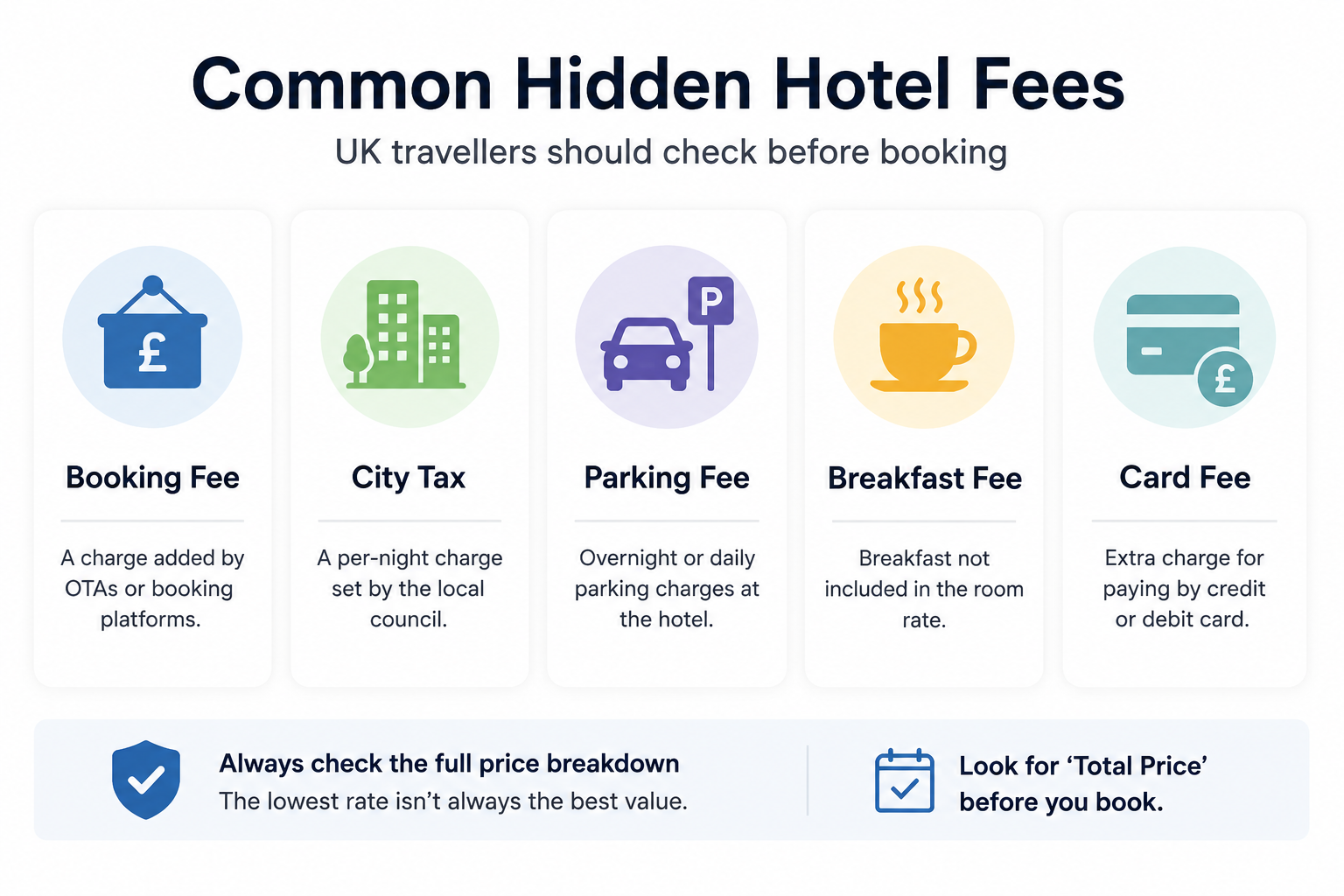
These are the extras that most often catch UK travellers out:
• Booking, service or admin fee a per-stay charge, most often added on third-party booking sites near the end of checkout.
• Resort or "facility" fee a daily charge covering things like wi-fi, gym or pool. Rare in the UK, common abroad (especially the US) worth checking on overseas stays.
• City or tourist tax (visitor levy) a local charge on overnight stays, now arriving in parts of the UK (see below).
• Card surcharge or currency mark-up a fee on certain card types, or a poor exchange rate if you're billed in a currency other than pounds.
• Early check-in / late check-out often chargeable if you need the room outside standard hours.
• Parking frequently extra, and "free parking" is sometimes offsite or first-come.
• Breakfast "room only" rates look cheaper until you add it back on.
• Cancellation, no-show or deposit charges plus pre-authorisation holds that ring-fence money on your card.
Are hidden hotel fees legal in the UK?
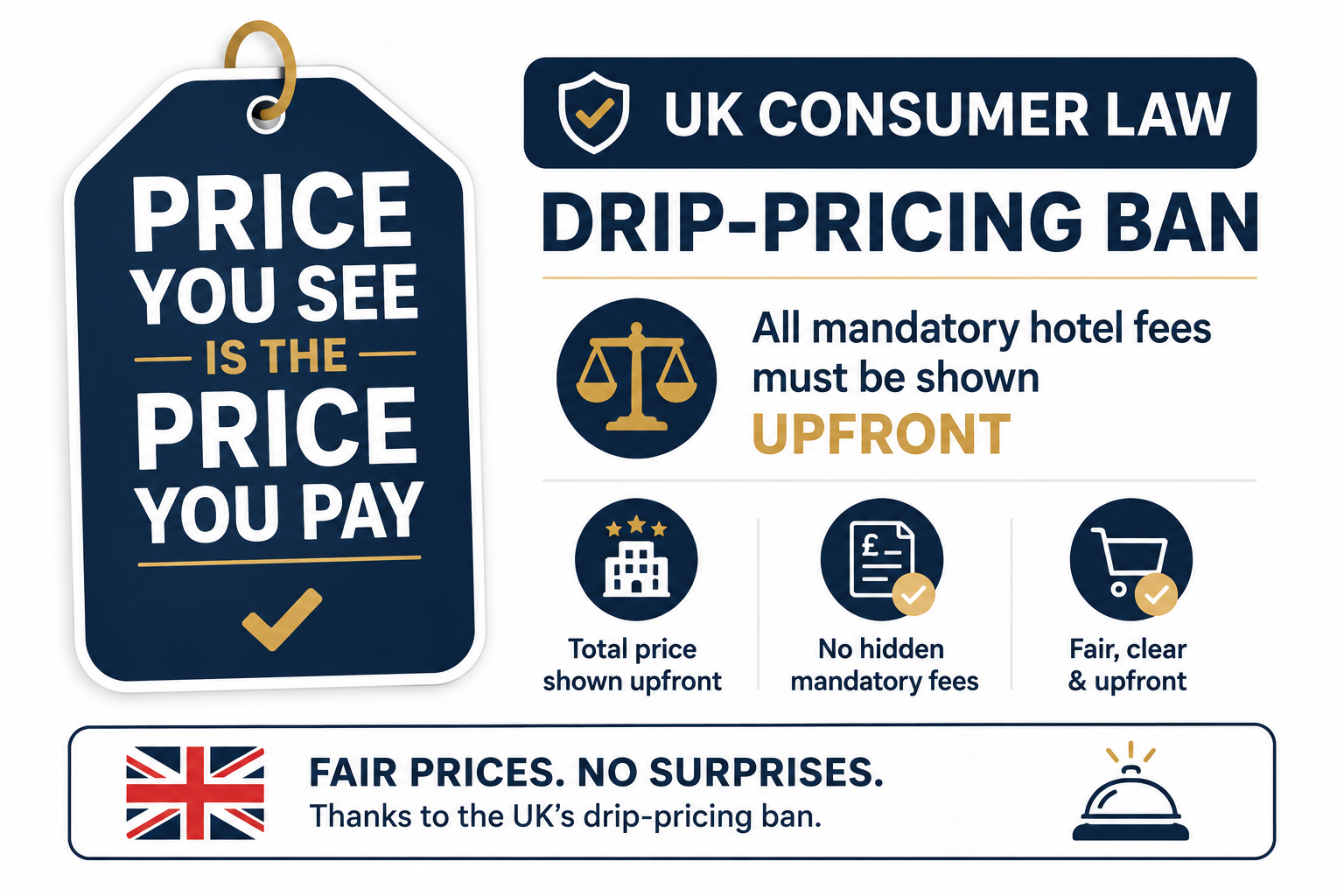
Not the mandatory ones any more. Since 6 April 2025, the Digital Markets, Competition and Consumers Act 2024 bans "drip pricing" advertising a low headline price and adding unavoidable charges as you go. The total price you're first shown must now include all mandatory fees such as admin, booking and service charges and taxes. Genuinely optional extras (parking, breakfast, an early check-in) can still be charged separately, but they must be presented clearly. Breaches can cost a business the higher of £300,000 or 10% of global turnover.
The catch: the rules are still bedding in. A Which? Travel investigation found some major travel firms were still obscuring mandatory fees after the ban came in so the sharp-eyed traveller still needs to check the final total, especially on third-party sites.
What about tourist taxes and city levies?
These aren't "hidden fees" they're a legitimate local tax, collected by the accommodation but they're a real extra to budget for, and they're spreading across the UK:
• Edinburgh introduces a 5% visitor levy on overnight stays from 24 July 2026 (with a cap on the number of nights charged).
• Manchester already applies a £1-per-room-per-night accommodation charge through its business-improvement district scheme.
• Wales has legislated a levy of around £1.25 per person per night, not expected before 2027.
• England is consulting on giving city mayors (London and Manchester among the likeliest first movers) the power to introduce their own levies so expect more cities to follow.
Depending on the city, the levy may be added at booking or collected at the hotel so check whether your quoted price already includes it.
How to avoid hidden hotel fees?
A quick routine that keeps your bill honest:
1. Compare the final total taxes and mandatory fees in, not the headline.
2. Read what the rate includes breakfast, parking, wi-fi, cancellation terms.
3. Pay in pounds decline "pay in your home currency" to dodge poor exchange rates.
4. Ask about early check-in / late check-out costs before you book, not on arrival.
5. Check the cancellation policy and any deposit or card hold.
6. Book direct with a transparent, no-hidden-fees provider where the price you see is the price you pay.
FAQ
What are hidden hotel fees?
Charges added on top of the room rate such as booking or service fees, resort fees, card or currency charges, parking, breakfast and local tourist taxes — that make the final price higher than the headline rate.
Are hidden hotel fees legal in the UK?
Mandatory fees can no longer be hidden. Since April 2025, the Digital Markets, Competition and Consumers Act 2024 bans "drip pricing", so unavoidable charges must be included in the total price shown upfront. Genuinely optional extras can still be charged, but must be shown clearly.
Do UK hotels charge a tourist tax?
Some places now do. Edinburgh introduces a 5% visitor levy from July 2026, Manchester already charges about £1 per room per night, and Wales has legislated a levy of around £1.25 per person per night from 2027. Rules vary by city.
What is a resort fee?
A daily charge some hotels add for facilities like wi-fi, gym or pool. It's rare in the UK but common abroad, so check for it on overseas stays.
How do I avoid hotel booking fees?
Compare the final total with all fees in, check what the rate includes, pay in pounds, and book direct with a transparent provider that doesn't add booking fees.