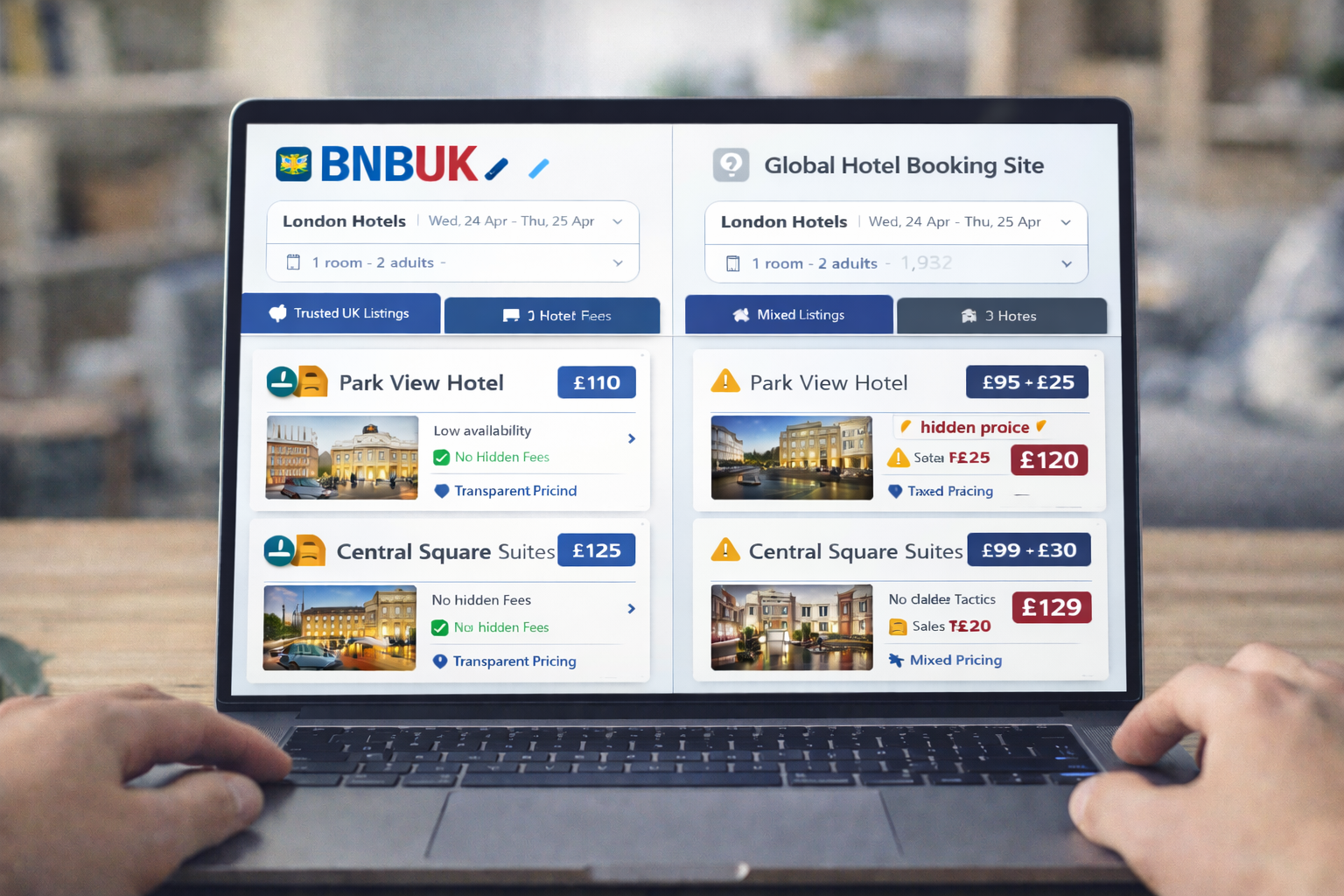
When booking a hotel in the UK, most travellers automatically turn to global booking platforms.
They feel familiar. They dominate search results. They appear to offer the widest choice.
But many travellers are now asking a different question:
Are global hotel sites actually more expensive?
The answer isn’t always simple but in many cases, the final cost can be higher than expected.
Let’s break down why.
The Headline Price Isn’t Always the Real Price
Global hotel platforms often display a competitive nightly rate at first glance.
However, that price may not include:
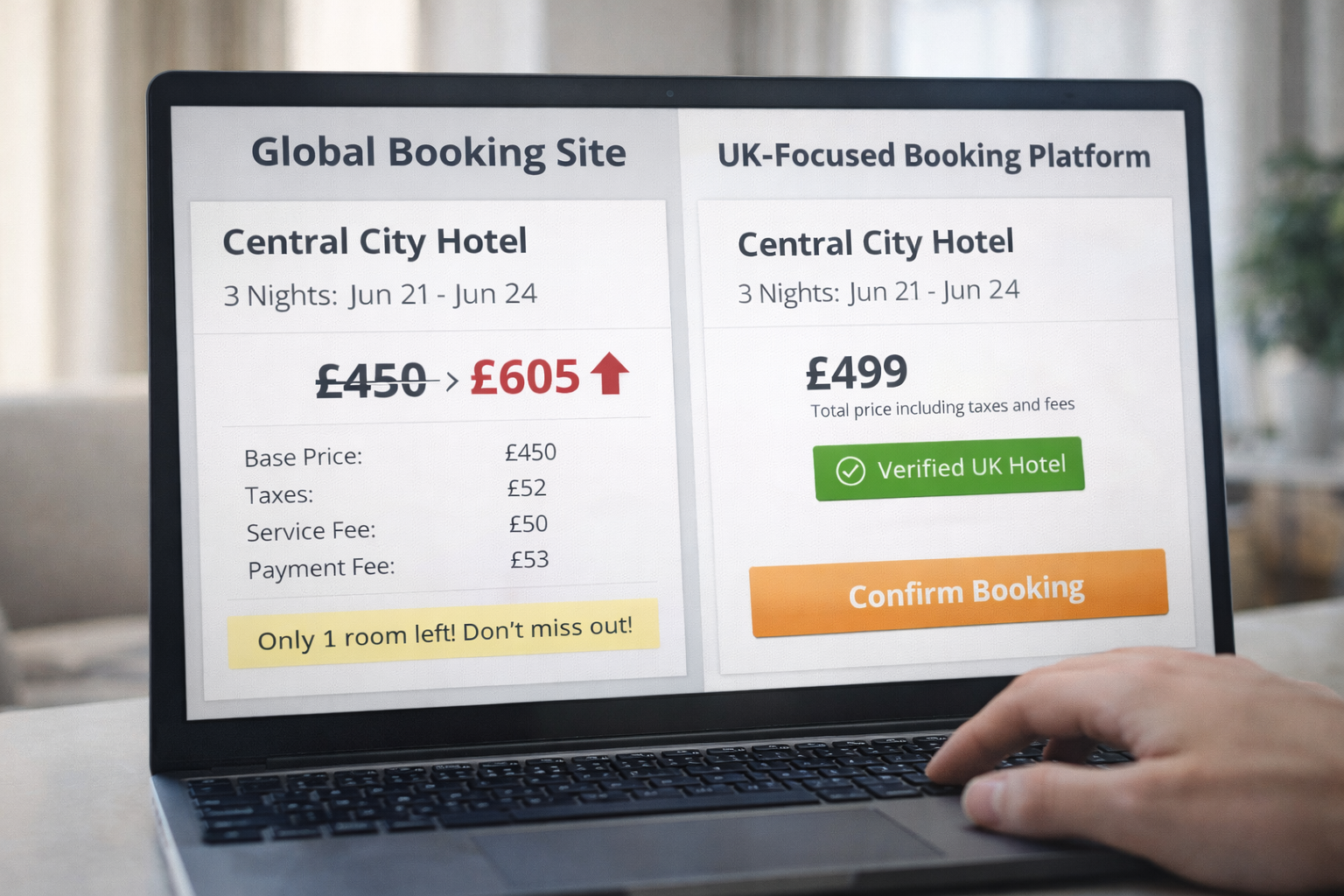
* Service or platform fees
* Taxes added at checkout
* Currency conversion markups
* Payment processing charges
* Non-refundable conditions
By the time you reach the final confirmation screen, the total can look very different.
It’s not that the price is hidden but it isn’t always presented clearly at the start.
That difference in presentation can make comparison harder.
Why Global Platforms Sometimes Cost More
Large international booking platforms operate across hundreds of countries. Their pricing systems are built to manage:
* Multiple tax systems
* Different currencies
* Commission structures
* Global demand fluctuations
That complexity often leads to layered pricing.
In contrast, region-focused platforms operate within a narrower market, which can allow for clearer cost presentation and fewer pricing layers.
Commission Structures Matter
Global platforms typically charge hotels commission fees for listings.
Hotels sometimes factor these commissions into room pricing.
While commission itself is standard practice across the industry, the structure can influence how prices are displayed and compared.
Travellers may not see this directly but it can affect final pricing differences between platforms.
The Psychology of Urgency
Many global sites use urgency messaging:
* “Only 1 room left!”
* “Booked 12 times in the last hour!”
* Countdown timers
While availability can genuinely be limited, urgency increases fast decision-making.
Faster decisions often mean less price comparison.
And less comparison can mean paying more.
Do Global Sites Always Cost More?
Not necessarily.
Global platforms offer:
* Large inventory
* International reach
* Extensive filtering tools
* Loyalty programmes
For international travel, they remain highly convenient.
However, for domestic UK stays, pricing can vary depending on:
* Event-driven demand
* City-specific pricing
* Local availability
* How clearly total costs are displayed
The difference is often in transparency rather than raw price.
Why Some UK Travellers Compare Alternatives
As domestic travel remains strong, many UK travellers are looking for:
* Clear total pricing upfront
* Verified UK hotel listings
* Reduced pricing layers
* Simpler comparison
This shift has contributed to the growth of UK-focused hotel booking platforms.
For example, BNBUK operates as a UK-focused hotel booking website that emphasizes verified listings and transparent pricing presentation.
Rather than competing on global scale, the focus is on clarity for domestic travellers.
How to Avoid Overpaying Whatever Platform You Use
Whether booking on a global site or a UK-focused platform, the smartest approach is consistent:
* Always check the total cost before confirming
* Compare at least two platforms
* Review cancellation policies carefully
* Avoid rushing due to urgency messages
* Check local event dates before booking
The key isn’t avoiding global platforms.
It’s avoiding rushed decisions.
Final Verdict: Are Global Hotel Sites More Expensive?
Sometimes but not always.
The real difference often lies in:
* How clearly prices are presented
* Whether total cost is visible early
* How much comparison a traveller does
Global hotel sites offer scale and convenience.
But clarity, comparison, and transparency are what ultimately determine how much you pay.
Booking smarter doesn’t require abandoning large platforms.
It requires slowing down, checking totals, and comparing options carefully.